Does Your Water Matter? The Coffee Ingredient Everyone Forgets
Your cup is over 98% water — here's how to make that 98% work for your coffee instead of against it.
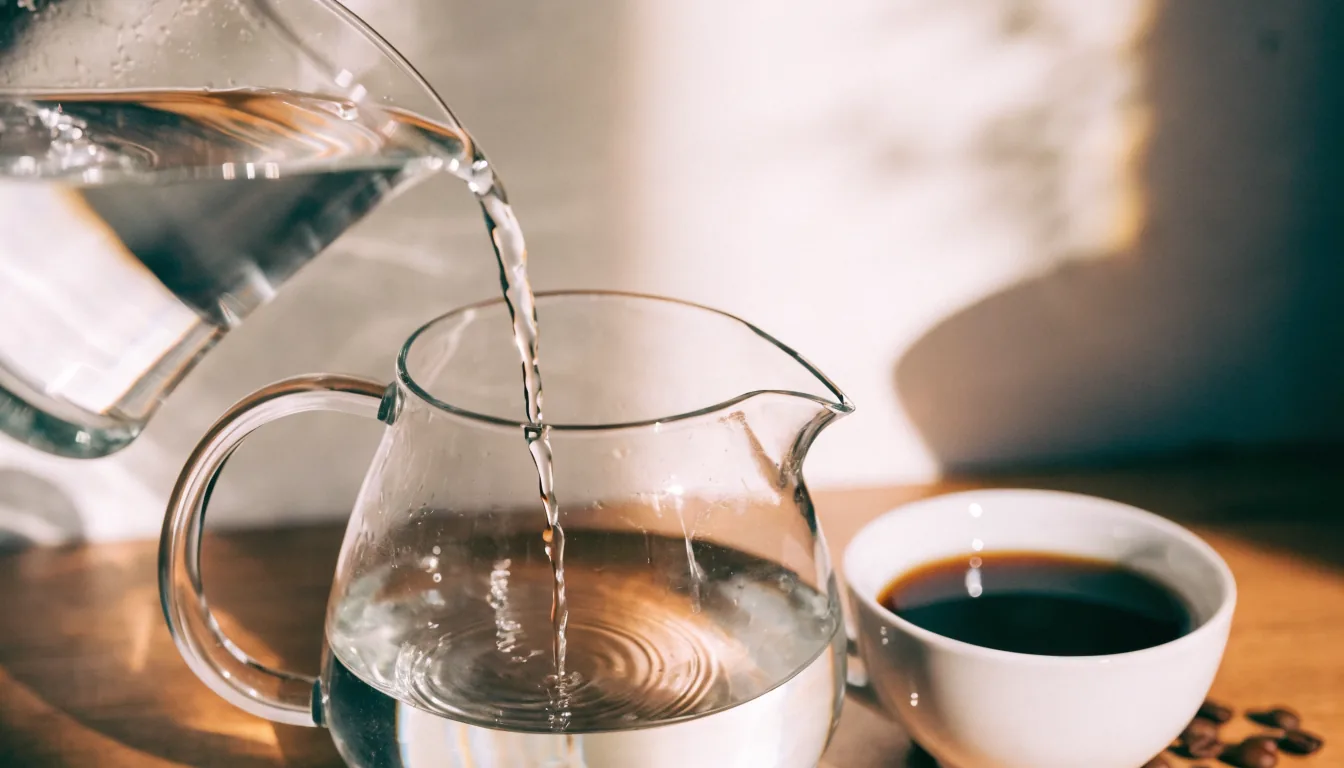
You'll happily spend on great beans, a good grinder and the right brewer — and then make the whole thing with water you'd never choose to drink on its own. Here's the uncomfortable truth: a brewed cup of coffee is more than 98% water. If the water is off, the coffee is off, no matter how good the beans are. The reassuring part is that fixing it is easy and cheap.
Why water matters so much
Water isn't just a carrier; it's the solvent that actually pulls flavour out of the grounds. The minerals dissolved in it — mainly calcium and magnesium — grab onto the compounds in coffee and extract them. Too few minerals and the water can't do its job, giving you a flat, weak, lifeless cup. Too many, or the wrong ones, and you get dull, chalky or harsh coffee. There's a sweet spot, and hitting it transforms every brew.
Hard water, soft water, and the sweet spot
Hard water is high in minerals. A little hardness helps extraction, but very hard water mutes the bright, delicate flavours and coats your kettle and machine in limescale over time. Soft or distilled water is nearly mineral-free, and it makes surprisingly bad coffee — thin and hollow, because there's nothing there to pull the flavour out. The ideal sits in the middle: moderate mineral content, roughly balanced, with total dissolved solids somewhere around 100–150 parts per million. You don't need to measure this at home; you just need to avoid both extremes.
The chlorine problem
Even if your tap water's mineral balance is fine, many municipal supplies are treated with chlorine, and chlorine's smell and taste travel straight into your cup as a faint swimming-pool note. A simple carbon filter — a jug filter, an under-sink filter, or the filter built into many machines — removes it easily and makes an immediate, noticeable difference.
What to actually use at home
For most people, good filtered tap water is the answer: it strips the chlorine and softens excessive hardness while keeping enough minerals to extract properly. If your tap water is genuinely awful or extremely hard, a balanced bottled mineral water (not distilled, not high-mineral "sparkling-mineral" territory) is a fine alternative. Avoid distilled and reverse-osmosis water unless it's been remineralised — on its own it makes coffee taste empty.
Don't forget temperature
Water quality's close cousin is water temperature. Aim for 90–96°C — just off a rolling boil. Too hot and you scald the coffee into bitterness; too cool and it under-extracts and turns sour. No thermometer? Boil the kettle, take the lid off, and wait about 30 seconds before you pour. That short pause is the difference between a smooth cup and a sharp one.
A five-minute upgrade
You don't need a laboratory. Filter your water to remove chlorine, avoid the extremes of very hard and very soft, and brew just off the boil. Do those three things and your existing beans will suddenly taste cleaner, sweeter and more like they did at the roastery. It's the least glamorous upgrade in coffee — and often the one you can taste the most.
Common questions
Does the water I use really change my coffee?
Enormously. A brewed cup is over 98% water, so its taste and mineral content carry straight into your coffee. Switching from harsh tap water to good filtered water is one of the biggest, cheapest upgrades you can make.
What temperature should the water be?
Between 90 and 96°C — just off the boil. Too hot and you scorch the coffee into bitterness; too cool and it under-extracts and tastes sour. If you have no thermometer, boil the kettle and wait about 30 seconds.
Is bottled water better than tap?
Not necessarily. Distilled or very soft water makes flat, weak coffee because it lacks the minerals that pull out flavour. Good filtered tap water, or a balanced mineral water, usually beats both extremes.
Will hard water hurt my coffee or my machine?
Both. Very hard water mutes flavour and, over time, scales up kettles and espresso machines with limescale. Filtering softens it enough to taste better and protects your equipment.