Espresso vs Moka vs Filter: Which Brewing Method Is Right for You?
Three ways to make coffee, three very different cups — how to choose the one that fits your taste, time and budget.
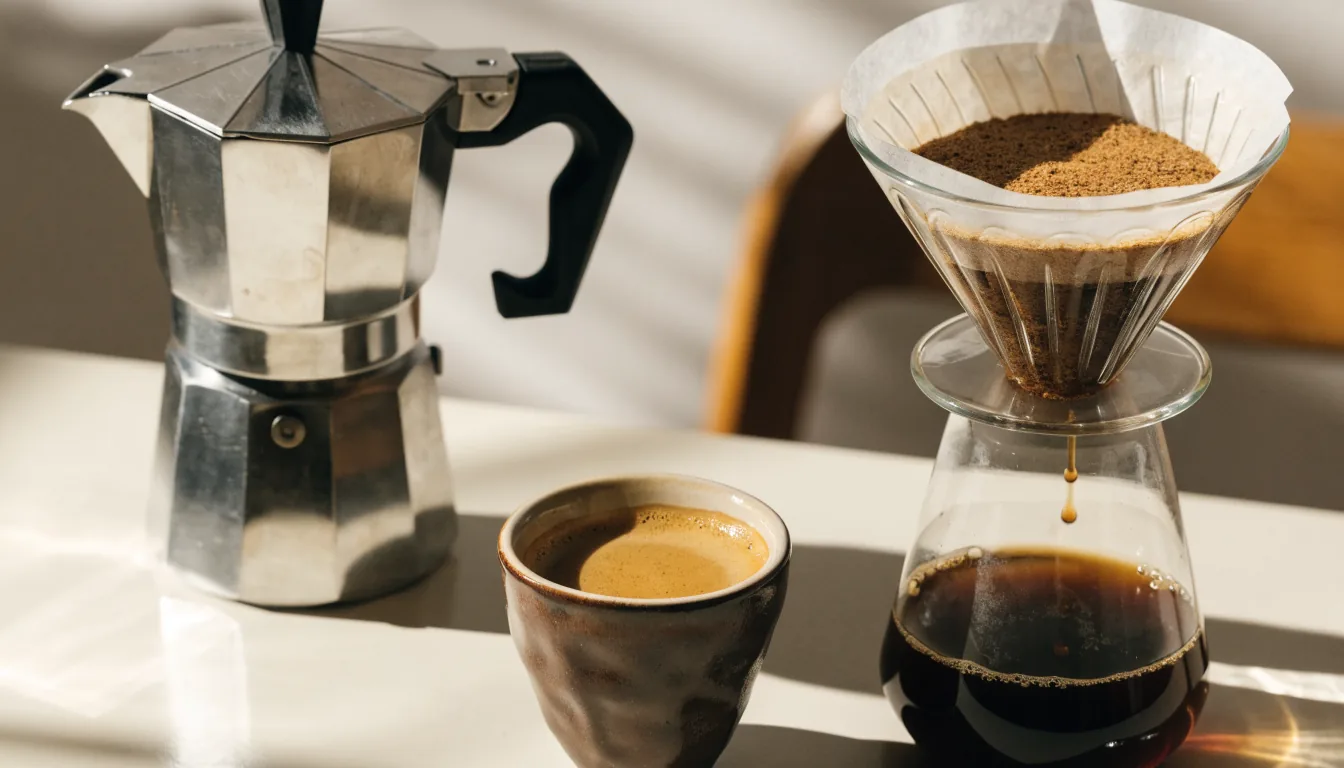
Walk into any coffee lover's kitchen and you'll find one of three tools doing the heavy lifting: an espresso machine, a moka pot, or a filter setup like a pour-over or drip. They all make coffee, but they make very different coffee. Here's an honest comparison so you can pick the method that actually suits your mornings — not just the one with the best marketing.
It all comes down to pressure and time
The reason these cups taste so different is simple physics: how hard the water is pushed through the coffee, and how long they stay in contact. High pressure and a quick contact time concentrate flavour and body; gentle, gravity-fed brewing draws out clarity and nuance. Understand that and the rest follows.
Espresso — intense, fast, and a real craft
An espresso machine forces water at around 9 bar of pressure through finely ground coffee in 25–30 seconds, producing a small, concentrated shot topped with crema. The result is intense, syrupy and the foundation of every cappuccino, latte and flat white. The upside is unbeatable richness and versatility with milk. The downside is cost and commitment: a capable machine and grinder aren't cheap, and getting a great shot means dialling in your grind. Best for: milk-drink lovers and people who enjoy the ritual of chasing the perfect shot. Roast: medium to dark.
Moka pot — bold coffee, tiny budget
The stovetop classic, and a fixture in kitchens across the Mediterranean and Middle East for a reason. A moka pot uses steam pressure (around 1–2 bar) to push water up through the coffee, making a strong, full-bodied brew that's close to espresso in spirit if not in crema. It costs very little, lasts for years, and needs no electricity. The trick is to pull it off the heat the moment it starts gurgling, so it never tastes burnt. Best for: big flavour on a small budget, and anyone who loves a strong morning cup or a homemade milk drink. Roast: medium to dark.
Filter — clean, nuanced and forgiving
Filter brewing — a V60 pour-over, a Chemex, or an automatic drip machine — lets hot water pass through the coffee by gravity, catching the grounds (and most of the oils) in a paper filter. The cup is lighter-bodied, exceptionally clean, and the best way to taste the subtle character of a good single origin. Pour-over gives you the most control; a drip machine gives you a hands-off big batch. Either way, the gear is affordable and the method is easy to learn. Best for: black-coffee drinkers who want clarity, flavour and an easy life. Roast: light to medium.
Quick comparison
- Strongest, most concentrated: espresso, then moka, then filter.
- Cheapest to start: moka pot or a simple pour-over.
- Easiest to master: French press and moka; pour-over next; espresso last.
- Best with milk: espresso and moka.
- Best for tasting origin character: filter, hands down.
Our honest advice
If you're just starting out, a moka pot or a pour-over will get you a genuinely great cup for very little money — begin there, learn what you enjoy, and let your taste guide any bigger purchase later. There's no single "best" method, only the one that fits your life. Whichever you choose, the coffee inside matters far more than the kit around it: start with fresh, well-roasted beans and every method rewards you.
Common questions
What's the real difference between espresso, moka and filter?
Pressure and contact time. Espresso forces hot water through fine coffee at about 9 bar in seconds for a concentrated shot. A moka pot uses gentle steam pressure for a strong, bold brew. Filter (pour-over or drip) lets water pass through by gravity for a lighter, cleaner cup.
Which method is easiest for beginners?
A French press or a moka pot. Both are inexpensive, forgiving and hard to get badly wrong. Pour-over is only slightly harder and gives you more control. A proper espresso machine has the steepest learning curve and cost.
Can I make real espresso in a moka pot?
Not quite — a moka pot brews at around 1–2 bar, far less than the ~9 bar of an espresso machine, so it won't produce true crema. But it makes a rich, strong, espresso-style coffee that's wonderful on its own or in milk drinks.
What roast should I use for each?
Medium to dark for espresso and moka, where richness and low acidity shine. Light to medium for filter, where clarity and brightness have room to show. Our roast-level guide goes deeper.