How to Brew the Perfect Pour-Over at Home
The clean, bright cup baristas love — with a repeatable recipe, real numbers, and fixes for when it goes wrong.
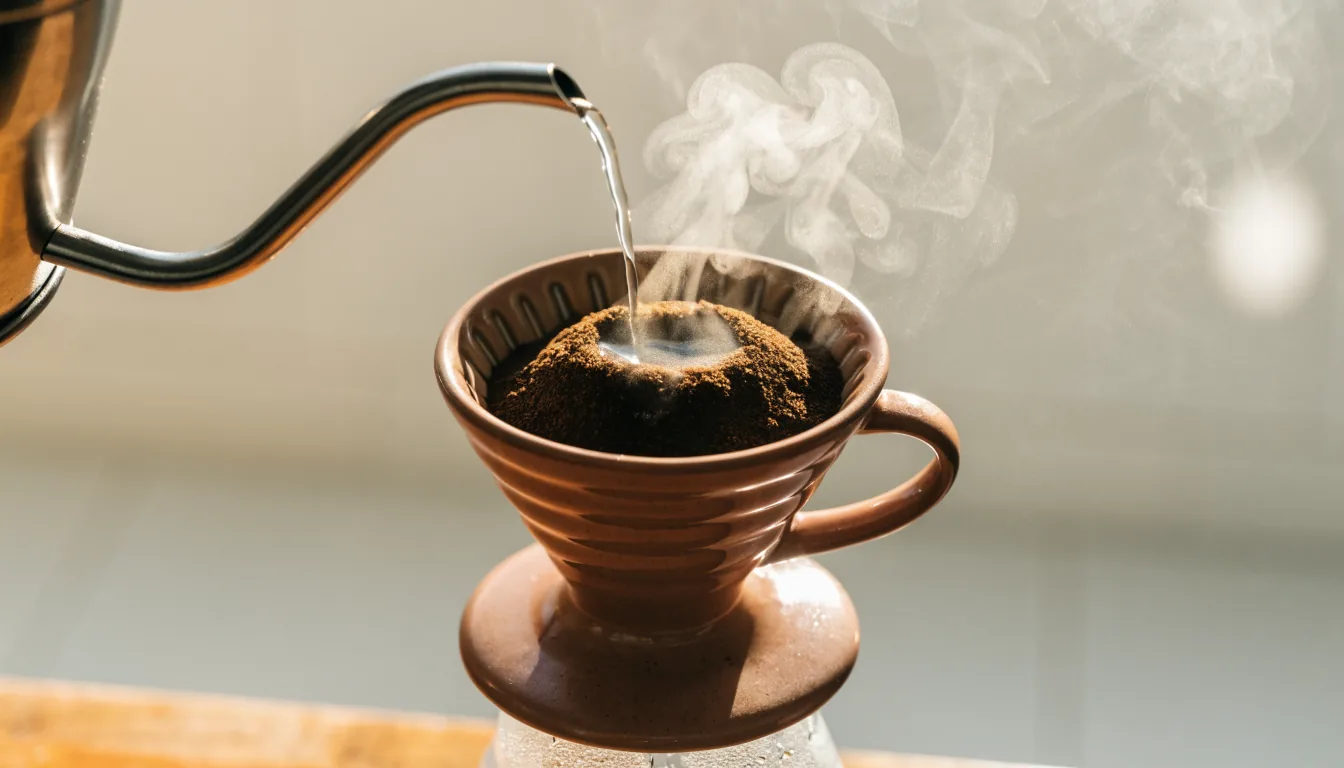
Pour-over gets called fussy. It isn't — it's just honest. Every choice you make shows up in the cup, which is exactly why it's the best way to taste what a good coffee can actually do. Get four things right and you'll pull the cleanest, most flavourful cup you can make without a machine. Here's the recipe we teach everyone who visits the roastery, plus the small tricks that separate a decent brew from a memorable one.
What you'll need
A dripper — a plastic or ceramic V60, or a Chemex for larger batches — paper filters, a kitchen scale, and a kettle. A gooseneck kettle helps you pour slowly and accurately, but if you don't have one, pour gently from a jug and you'll still be fine. The two things you can't skip are fresh coffee and a scale. Coffee starts going stale within minutes of grinding, so grind right before you brew, and weigh your coffee and water instead of guessing.
The recipe
We'll use a 1:16 ratio — 22 g of coffee to 350 g of water, which makes one generous mug. Set your grind to medium-fine, about the texture of table salt, and heat your water to 92–96°C (just off the boil; if you don't have a thermometer, boil it and wait 30 seconds).
Step by step
1. Rinse the filter. Put the filter in the dripper and pour hot water through it into your cup or carafe. This rinses away any papery taste and warms everything up. Tip that water out.
2. Add and level. Add your 22 g of grounds and give the dripper a gentle shake so the bed sits flat. A level bed means even extraction.
3. Bloom (0:00–0:45). Start a timer and pour just enough water — about 50 g — to wet all the grounds. Watch them puff up and release gas; that's the bloom, and a big, lively one is a sign of fresh coffee. Let it sit 30–45 seconds. Skipping the bloom is the number-one reason a cup tastes flat.
4. Pour in stages (0:45–2:00). Pour the rest of the water in slow, steady spirals from the centre outward, keeping the level about two-thirds up the cone. Adding it in two or three pours rather than one flood keeps the extraction even and the flavours balanced.
5. Draw down (finish by ~3:00). The whole brew should finish draining between 2:45 and 3:15. When it's done, the coffee bed should look flat and even, not gouged out on one side. Swirl the carafe, pour, and drink it hot.
Dialling it in
Your first cup is data, not a verdict. Taste it and adjust one thing at a time:
- Thin, sour, watery? Under-extracted. Grind finer, or slow your pour so the water spends more time with the coffee.
- Harsh, bitter, drying? Over-extracted. Grind coarser, or pour a little faster.
- Just weak? Use more coffee (move toward 1:15) rather than less water.
Within two or three brews you'll land on a recipe your beans love. When you do, write it down — the exact grams, grind setting and timing. Future you, half-awake at 6 a.m., will be grateful.
A few small things that matter
Use good water — coffee is over 98% water, so if your tap water tastes off, your coffee will too (filtered is usually plenty). Keep your kettle just off the boil rather than screaming hot. And clean your gear: old coffee oils turn rancid and quietly ruin fresh beans. None of this is complicated. It's just paying attention, and paying attention is the whole pleasure of a pour-over.
Start with a medium-roast single origin — something bright and forgiving — and once the method is second nature, branch out. The same recipe will show you a completely different side of every coffee you run through it.
Common questions
What ratio should I use for pour-over?
A 1:16 coffee-to-water ratio is the reliable starting point — 22 g of coffee to 350 g of water for one big cup. Prefer it stronger? Move toward 1:15. Lighter? Toward 1:17. Change one variable at a time.
What grind size is best for pour-over?
Medium-fine, roughly the texture of table salt. If your brew drains in under two minutes and tastes thin or sour, grind finer; if it takes over three and a half minutes and tastes harsh, grind coarser.
Do I really need a scale?
Yes — it is the single cheapest upgrade to your coffee. Guessing scoops gives you a different, usually worse, cup every day. A basic kitchen scale that reads to 1 g is all you need.
Why does my pour-over taste sour or bitter?
Sour, thin and watery means under-extraction — grind finer or slow your pour. Bitter, dry and hollow means over-extraction — grind coarser or pour a touch faster. Fresh beans and the right water temperature (92–96°C) fix most of the rest.