Light, Medium or Dark? A Real Guide to Coffee Roast Levels
What roasting actually does to a bean — and how to pick the roast you'll genuinely love.
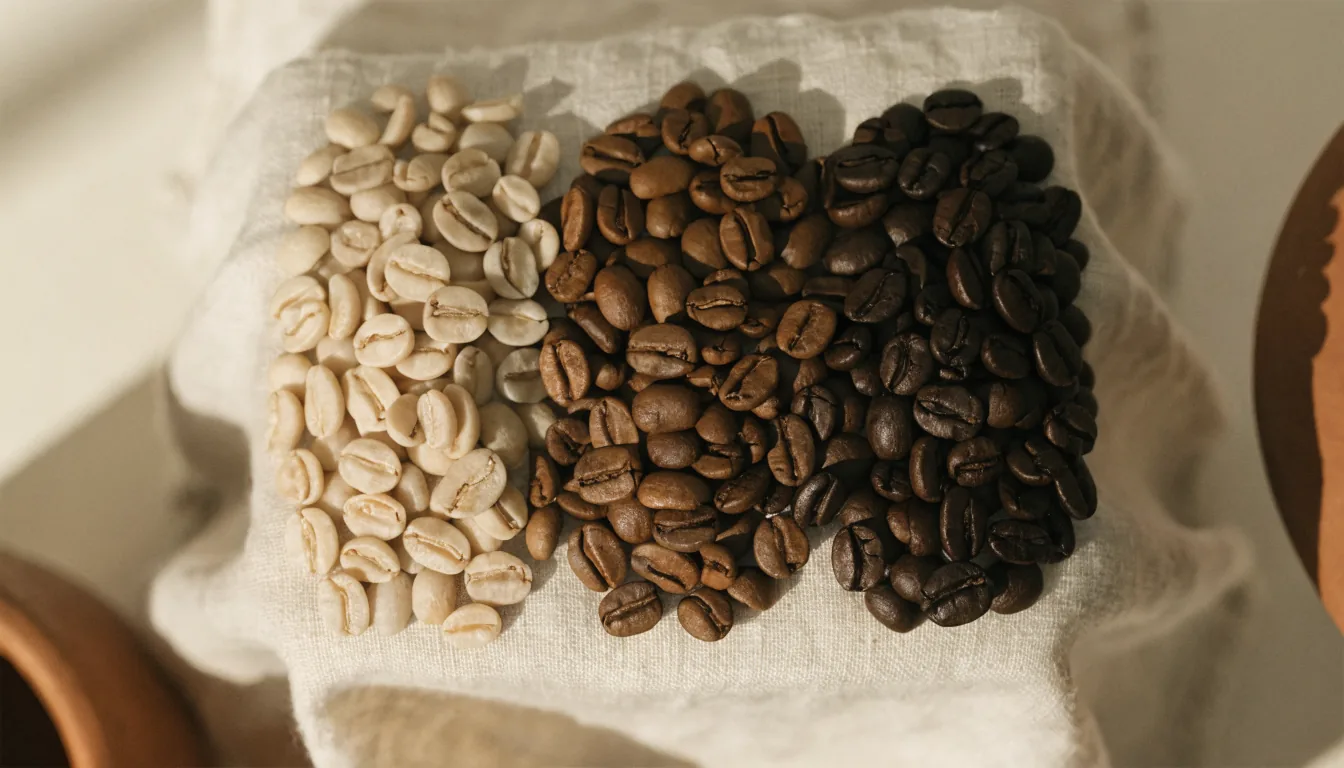
"Light, medium or dark" is the first question people ask about a bag of coffee — and the most misunderstood. Roast level isn't about strength or caffeine. It's about how far the beans were taken in the roaster, and it shapes flavour more than almost anything else you can control. Here's what's really happening, and how to use it to buy coffee you'll love.
What roasting actually does
Green coffee beans are dense, grassy and nearly flavourless. Roasting applies heat over 8–15 minutes, and somewhere around 196°C the beans hit "first crack" — an audible pop as they expand and moisture escapes. Stop soon after first crack and you have a light roast. Carry on and, near 224°C, you reach "second crack," the territory of dark roasts. The longer the roast, the more the bean's own delicate character gives way to flavours the roasting itself creates: caramelisation, then deep, roasty, bittersweet notes. Every roast level is a trade-off between origin character and roast character.
Light roast
Pulled from the roaster early, light roasts keep the most of what the farm gave them — the qualities of the variety, soil and altitude. Expect brighter acidity, more delicate florals and fruit, and a lighter body. This is where a special Ethiopian tastes like tea, jasmine and berries. Light roasts are dry and matte, and they shine in pour-over and filter, where their clarity has room to sing. Reach for light when you want to taste the coffee's origin rather than the roast.
Medium roast
The crowd-pleaser, and our most popular style for good reason. Taken a little further, medium roasts balance the bean's origin flavours with the sweetness that roasting develops — caramel, toasted nuts, milk chocolate, a rounder body, and acidity that's present but gentle. They're wonderfully versatile, working in a pour-over, French press, moka pot or espresso machine, which is why our house blends live here. If you're not sure what you like, start medium.
Dark roast
Roasted longest, dark roasts trade delicate origin notes for deep, bold, unmistakable flavour — dark chocolate, cocoa, a whisper of smoke — with a heavy body and low acidity. The beans look darker and often shiny with surface oils. This is the classic profile for a punchy espresso or a strong moka pot, and it holds up beautifully to milk. Choose dark when you want your coffee rich, comforting and impossible to ignore.
Two myths worth retiring
First, dark roast is not "stronger" coffee — longer roasting slightly reduces caffeine, and perceived strength really comes from how much coffee you brew per cup. Second, a shiny, oily bean isn't a badge of quality; it just means the roast went dark enough to bring the oils to the surface. Some of the world's best coffees are pale and bone-dry.
So which should you buy?
Chase brightness, fruit and complexity? Go light and brew it as filter. Want an easy, balanced everyday cup that does everything? Medium. Love it bold, rich and especially good with milk? Dark. Genuinely unsure? Buy a light and a dark, brew them the same way on the same morning, and taste them side by side — it's the most enjoyable research you'll ever do, and it's exactly how we settle our own favourites at the roastery.
Common questions
Does dark roast have more caffeine?
No — if anything, slightly less. Longer roasting burns off a tiny amount of caffeine, and beans lose mass as they roast. The difference is small either way; strength in the cup comes from your brew ratio, not the roast colour.
Are oily beans a sign of quality?
Not at all. Surface oil simply means the beans were roasted dark enough to draw their oils out. It is a roast-level trait, not a quality mark — plenty of superb light and medium roasts look completely dry.
Which roast is best for espresso?
Medium to dark roasts are the traditional choice because they give a rich, sweet, low-acidity shot that stands up to milk. That said, lighter "omni" roasts can make bright, fruity espresso if you enjoy that style and dial in your grinder.
How can I tell the roast level of a bag?
Look for a stated roast level on the label, then judge the beans: pale and dry with a matte surface is light; medium brown and dry is medium; dark brown and shiny is dark. Our guide to reading a coffee label covers the rest.